
Governance Regulations Drafting for Companies in Jeddah
Last Updated:
July 12, 2026
Internal regulations that govern decision-making, authority, conflict of interest, disclosure, and management responsibilities within the company.
Governance regulations aren’t written to dress up a company’s administrative file; they’re meant to organize how decisions are made, define authority, and clarify the relationship between partners, management, and employees. The larger a company grows, the more investors come on board, or the more sensitive decisions become, the more important clear governance regulations become.
BMS Legal offers governance regulations drafting services for companies in Jeddah as part of our corporate governance and compliance track, under the supervision of lawyer Sunaitan Mohammed bin Hayef Al-Subaie, a licensed lawyer and member of the Saudi Bar Association, with professional qualifications in governance, compliance, and risk management. The service focuses on preparing regulations that can actually be applied within the company, not just generic headings copied from ready-made templates.
- Supervised by Lawyer Sunaitan Al-Subaie
- Custom Governance Regulations
- Organizing Authority
- Conflict of Interest
- Internal Disclosure
Does Your Company Need Governance Regulations?
Send your company type, number of partners, organizational structure, current decision-making process, and any disputes or conflicts of authority, so we can determine the appropriate scope of governance regulations.
Select Your Company Type:
- Family Business
- Startup
- Investor Coming On Board
- Authority Dispute
- Conflict of Interest
- Organizing the Board of Directors
What Are Governance Regulations for Companies in Jeddah?
Governance regulations for companies in Jeddah are internal documents that govern how decisions are made, how authority is distributed, the limits of management, conflict of interest, internal disclosure, and oversight mechanisms within the company. Regulations vary depending on the company type, number of partners, scale of operations, and the nature of administrative and regulatory risks.
Governance regulations aren’t limited to listed companies or large institutions. A family business may need them when management changes hands, a startup may need them when an investor comes on board, and a mid-sized company may need them as authority expands and management multiplies. That’s why drafting starts with understanding the company’s structure, then identifying what actually needs to be regulated within the document.
Professional Supervision: Lawyer Sunaitan Mohammed bin Hayef Al-Subaie
BMS Legal’s governance regulations drafting service is provided under the supervision of lawyer Sunaitan Mohammed bin Hayef Al-Subaie, a licensed lawyer and member of the Saudi Bar Association, with professional qualifications in governance, compliance, and risk management.
This track focuses on turning governance from a general concept into practical rules within the company, such as organizing authority, defining management responsibilities, regulating conflict of interest, documenting decisions, and establishing clear mechanisms for internal disclosure and follow-up.
Professional Qualifications Related to Compliance
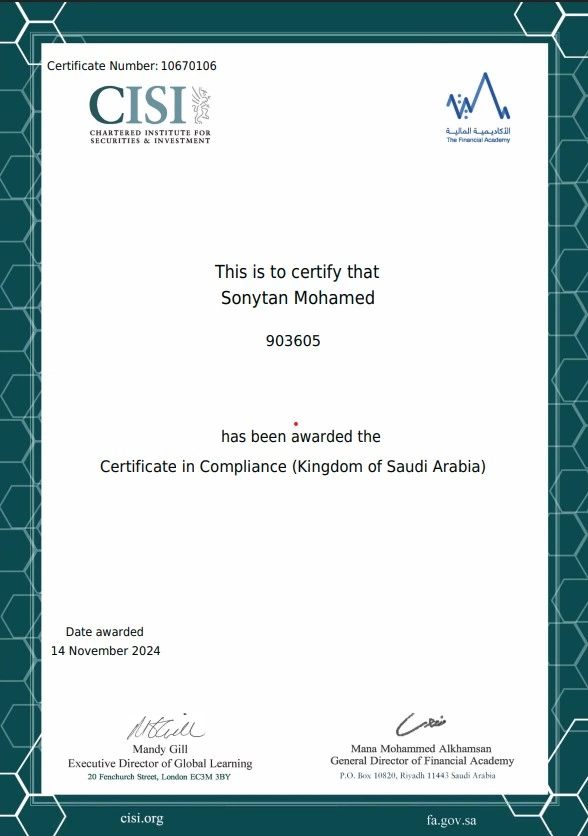
Certificate in Compliance – Kingdom of Saudi Arabia
A professional qualification in compliance within the Kingdom, suited to understanding the compliance environment and corporate policies.
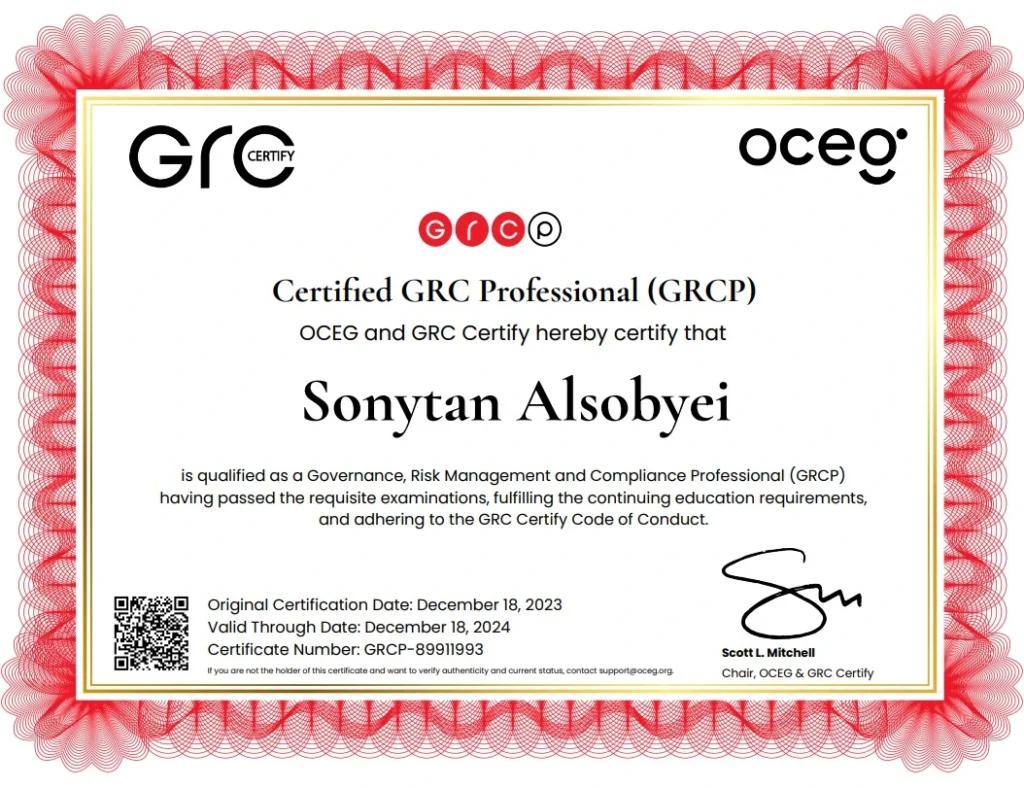
GRCP – Governance, Risk and Compliance Professional
A professional qualification in governance, risk management, and compliance, suited to building a corporate GRC framework.
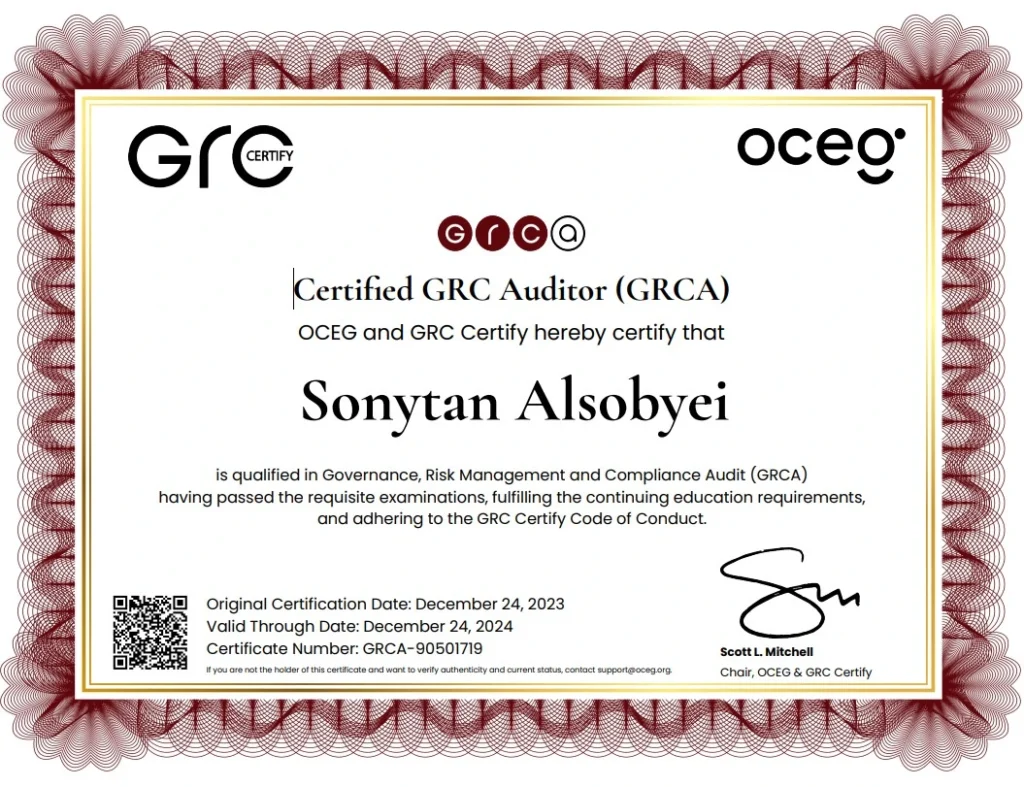
GRCA – Governance, Risk and Compliance Auditor
A professional qualification in auditing governance, risk, and compliance, suited to assessing internal policies and procedures.
What Do Governance Regulations Organize Within a Company?
Governance regulations differ from one company to another, but there are core areas that help control decision-making and reduce internal disputes.
Administrative Authority
Defining the authority of partners, the director, the board of directors if any, and executive management in daily and strategic decisions.
Decision-Making Process
Organizing how decisions are approved, the required quorum, the voting mechanism, the limits of individual decisions, and documentation of minutes.
Conflict of Interest
Setting clear rules for disclosing personal, family, or commercial interests that could affect the company's decisions.
Internal Disclosure
Determining what information must be disclosed within the company, who has the right to access it, and when it must be updated.
Oversight & Follow-up
Organizing the mechanism for reviewing the implementation of decisions and policies, and determining who's responsible for monitoring internal compliance.
The Relationship Between Partners & Management
Clarifying the limits of the roles of the partner, director, executive management, and those authorized to sign, contract, or handle financial matters.
BMS Legal's Governance Regulations Drafting Services
This service helps companies prepare governance regulations suited to their structure and activity, focusing on the aspects that directly affect decision-making, management, and risk.
Drafting New Governance Regulations
Preparing governance regulations from scratch after studying the company's activity, number of partners, current authorities, and the nature of recurring decisions.
Reviewing Existing Governance Regulations
Examining the current regulations and identifying gaps, ambiguity, or conflicts between the provisions and actual practices within the company.
Organizing Authority & Delegations
Drafting provisions that define who has the right to sign, contract, approve finances, hire, authorize, or take administrative action.
Conflict of Interest Policies
Preparing clear rules for disclosing interests, preventing personal gain, dealing with related parties, and the resolution mechanism.
Internal Disclosure Policies
Organizing the sharing of information within the company, the limits of confidentiality, and the mechanism for notifying partners or management of material decisions.
Family Business Governance
Drafting rules that help separate family relationships from management, and define the role of family members in decision-making, operations, and ownership.
Startup Governance
Preparing rules suited to companies preparing for investors, funding rounds, or strategic partnerships.
When Does a Company Need to Draft or Update Governance Regulations?
A company may need governance regulations when internal decision-making becomes more complex, when disputes over authority arise, or when new investors or partners come on board.
When a New Partner or Investor Joins
A new party joining requires clarifying rights, authority, the voting mechanism, and access to information.
When Administrative Disputes Keep Recurring
If disputes over who has decision-making authority or the right to sign keep recurring, there's usually a governance gap.
When the Company Expands
Growth in branches, departments, or employees makes individual decisions insufficient to organize the work.
When It's a Family Business
Family businesses need clear rules that separate ownership, management, and personal relationships.
When Preparing for a Funding Round
Investors care about clarity of decision-making, authority, and conflict of interest before joining a company.
When a Conflict-of-Interest Policy Is Missing
The absence of disclosure and resolution rules can create biased decisions or future disputes between partners.
5 Steps to Drafting a Company's Governance Regulations
Documents Needed to Draft Governance Regulations
The following documents help us understand the company’s situation and draft governance regulations suited to it, instead of using a generic template.
- Commercial registration and the company's basic details.
- Articles of association or bylaws, if any.
- A partners' agreement, if any.
- The administrative or organizational structure.
- A list of partners or owners and their ownership percentages.
- A list of those authorized to sign or manage.
- Current internal policies, if any.
- Previous minutes or resolutions, if needed.
- A description of current problems or points of ambiguity.
- The purpose of the regulations: organization, expansion, an investor joining, or resolving disputes.
Common Mistakes That Weaken Governance Regulations
Copying Generic Regulations Without Adjustment
Generic regulations may not reflect the number of partners, the nature of management, or the actual authority within the company.
Leaving Authority Loosely Worded
Phrases like "management may take whatever action is necessary" aren't enough when sensitive financial, contractual, or operational decisions are involved.
Neglecting Conflict of Interest
Failing to regulate conflict of interest opens the door to disputes involving related parties or personal gain from decisions.
Not Linking the Regulations to the Articles of Association
If the regulations conflict with the articles of association or bylaws, some provisions may become impractical or disputed.
Lack of a Regulation Update Mechanism
A company that expands or changes its management needs periodic review of its governance regulations, not a one-time approval.
Governance Regulations Drafting for Companies in Jeddah
This page serves companies in Jeddah that need to organize their authority, decisions, and conflicts of interest, whether they’re family businesses, startups, mid-sized companies, or companies preparing to bring in investors. A large part of the work can be carried out remotely once the documents are clear and shareable.
Why Choose BMS Legal for Governance Regulations Drafting?
Specialized Professional Supervision
The service is reviewed under the supervision of lawyer Sunaitan Mohammed bin Hayef Al-Subaie, with professional qualifications in governance, compliance, and risk management.
Regulations Tied to the Company's Reality
The regulations aren't drafted as a generic copy, but according to the number of partners, authority, management model, and scale of decisions.
Focus on Preventing Disputes
Good regulations reduce ambiguity around decision-making, signing authority, delegation, and conflict of interest.
Tying Governance to Compliance
Governance isn't separate from internal compliance, so the regulations can be connected to conduct, confidentiality, and disclosure policies.
Practical, Enforceable Drafting
The goal is to prepare regulations that partners and management will actually use, not a lengthy document that's hard to apply.
Legal Services Related to Corporate Compliance
Trust Details to Support Your Decision Before Sharing Company Documents
Before sharing your articles of association, partners’ agreement, or internal policies, you can review the firm’s and team’s details through the dedicated verification pages on the website.
Lawyer Sunaitan Mohammed bin Hayef Al-Subaie
Lawyer Sunaitan's professional profile shows license details and professional qualifications related to governance and compliance.
Lawyers' Licenses
You can review the license details of the lawyers on our team.
Commercial Registration
This page shows professional membership details for our team. BMS Legal is registered as an active commercial entity, in the form of a professional company.
License & Registration
A single page bringing together the firm's verification and accreditation details.
Does Your Company Need Clear Governance Regulations?
Send your company type, number of partners, current decision-making process, and any points of ambiguity or dispute, so we can determine the appropriate scope of governance regulations for your company.
Frequently Asked Questions About Corporate Compliance in Jeddah
What do governance regulations for companies mean?
Governance regulations are an internal document that organizes authority, decision-making, conflict of interest, disclosure, and management responsibilities within the company.
Do small companies need governance regulations?
Yes, they may be needed when there’s more than one partner, when expanding, when an investor joins, or when administrative disputes keep recurring.
What's the difference between governance regulations and a partners' agreement?
A partners’ agreement organizes the contractual relationship between them, while governance regulations organize how the company is managed, how decisions are made, and how authority is exercised.
Can existing governance regulations be amended?
Yes, existing regulations can be reviewed and updated if they no longer reflect the company’s situation or contain ambiguous provisions.
What are the most important provisions in governance regulations?
The most important provisions are usually: authority, voting, delegation, conflict of interest, internal disclosure, and documentation of decisions.
Does one set of regulations work for all companies?
No, since the regulations need to be built around the company type, number of partners, management style, and internal risks.
Does lawyer Sunaitan supervise the drafting of governance regulations?
Yes, the service is offered as part of our corporate governance and compliance track, under the supervision of lawyer Sunaitan Mohammed bin Hayef Al-Subaie.
What's the first step in drafting governance regulations?
The first step is to send the company’s details, articles of association, organizational structure, and the points of ambiguity that need to be regulated.