
Mortgage conditions in Saudi Arabia start before signing the contract or paying the deposit. They do not end with the lender’s initial approval. The file requires reviewing the title deed, the owner’s legal capacity, the secured debt, the method of documenting the mortgage, and the effect of the mortgage entry on sale or ownership transfer.
Property mortgage conditions become especially important when the property is already mortgaged to a financing entity, linked to a sale transaction, or subject to an agreement to transfer the mortgage. A mortgage does not mean the property automatically transfers to the mortgagee. It makes the property security for a specific debt until the reason for the mortgage ends.
Summary of Mortgage Conditions Before Any Action
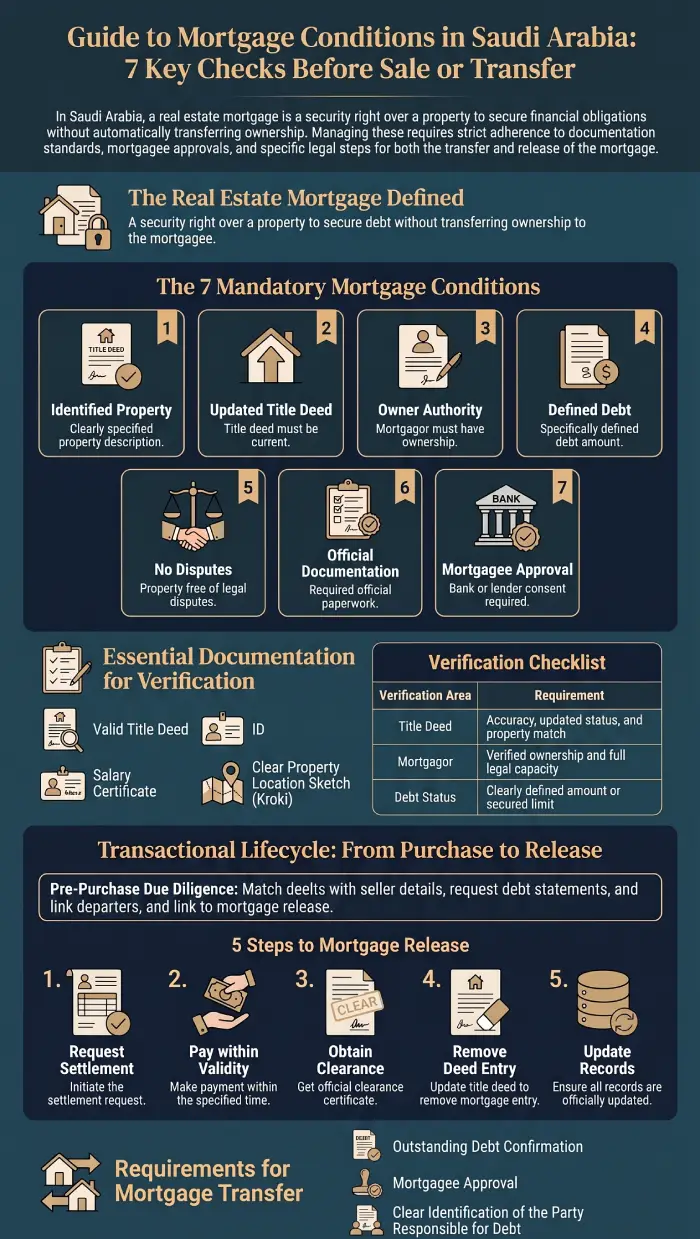
Mortgage conditions are based on seven key elements: a specific property, a valid title deed, an owner with disposal authority, a clear debt, a mortgage entry capable of documentation, valid approval, and a known method for releasing or transferring the mortgage.
Before mortgaging a property or buying a mortgaged property, review the following points:
- The title deed is valid and matches the property details.
- The mortgagor is the owner or an agent with clear authority.
- The secured debt or its maximum limit is defined.
- The property is free from disputes or restrictions affecting the mortgage.
- The mortgage is documented through the approved channels.
- The mortgagee’s approval is clear when sale or transfer is required.
- The method for releasing the mortgage after payment is clear.
The main risk is not the existence of a mortgage alone. The risk appears when sale, payment, or ownership transfer occurs without arranging the mortgage entry and supporting documents.
What Does a Real Estate Mortgage Mean in Saudi Arabia?
A real estate mortgage in Saudi Arabia is a security right attached to a specific property to secure a debt or financial obligation. Under the Registered Real Estate Mortgage Law, a mortgage is not merely a personal promise; it is an entry that affects the property and the rights connected to it.
A mortgage differs from a sale. Sale transfers ownership, while a mortgage usually keeps ownership with the mortgagor, subject to an entry in favor of the mortgagee. This entry may affect sale, conveyance, mortgage transfer, and mortgage release after repayment.
A mortgage usually has three elements: the mortgagor, the mortgagee, and the mortgaged property. The mortgagor is the owner or the person authorized to mortgage the property. The mortgagee is the creditor or financing entity. The mortgaged property must be clearly identified to avoid uncertainty.
A real estate mortgage is connected to a debt or financing as security over the property, but it does not by itself regulate installments. The mortgage contract and debt statement should be reviewed together, because the practical risk may appear in the mortgage entry, the debt amount, or the mortgage release conditions.
Mortgage Conditions in Saudi Arabia
Mortgage conditions in Saudi Arabia revolve around valid ownership, the mortgagor’s capacity, clarity of the debt, and the possibility of documenting the mortgage entry. If one of these elements is missing, the mortgage may be delayed or disputed at the sale or release stage.
Property mortgage conditions in Saudi Arabia include:
- The property must be eligible for mortgage and clearly identified.
- The title deed must be valid and updated when required.
- The mortgagor must have disposal authority or a suitable power of attorney.
- The secured debt must be defined or capable of being defined.
- The property must be free from disputes or restrictions that prevent or weaken the mortgage.
- The mortgage must be documented according to approved procedures.
- The mortgagee’s approval must be clear when sale or transfer is involved.
Registered real estate mortgage conditions should not be confused with the bank’s financing acceptance conditions. Financing conditions relate to income and creditworthiness, while mortgage conditions relate to the title deed, ownership, mortgage entry, and documentation authority.
Before accepting a mortgage or entering into a mortgaged property transaction, a real estate deed inquiry can help verify ownership details and visible restrictions before signing.
Mortgage Documentation Conditions and Title Deed Mortgage
Mortgage documentation is the procedure that makes the mortgage entry visible in the document or register connected to the property. Mortgage documentation procedures become important when selling the property, transferring the mortgage, or requesting release of the mortgage after repayment.
Mortgage documentation conditions usually require the mortgagor, or an authorized representative, to attend under a valid power of attorney, with the secured debt or obligation clearly identified. In real estate financing, the financing entity’s representative must attend in the correct capacity, with clear authority to complete the procedure.
| Element | What to Check Before Documentation |
|---|---|
| Title deed | Accuracy of details and match with the property |
| Mortgagor | Ownership, capacity, and disposal authority |
| Power of attorney | Clear wording allowing mortgage and documentation |
| Debt | Amount or secured limit is defined |
| Mortgagee | Legal capacity and approval of the right holder |
| Entry | No restriction preventing mortgage or transfer |
When mortgaging an electronic title deed, the deed’s existence is not enough. The restrictions, debt status, mortgagee’s position, and future mortgage release process must also be reviewed.
Mortgage Transfer Before Ownership Transfer
Mortgage transfer means changing the arrangement of the entry or its parties according to specific approvals and procedures. It does not mean ownership transfers automatically, nor does it release the original debtor from the obligation through a private agreement alone.
Mortgage transfer may be needed when selling a mortgaged property, transferring the debt, or restructuring financing. Before requesting transfer, review the remaining debt amount, the mortgagee’s approval, the validity of the title deed, and the party who will bear the debt after transfer.
An agreement between the seller and buyer is not enough if the right holder does not approve. The conditions for transferring ownership of a property mortgaged to a real estate bank relate to the debt amount, approval, and documentation.
Buying or Selling a Mortgaged Property
Selling a mortgaged property may be possible in some cases, but the sale must be clearly arranged with the mortgagee before conveyance. The practical rule is not that sale is always prohibited. The key issue is knowing the debt amount and the method for releasing or transferring the mortgage.
Before buying a mortgaged property, check the following:
- The title deed matches the seller’s identity and the property details.
- A recent debt statement is available from the financing entity.
- The method for paying the debt from the sale price is clear.
- The deposit is linked to the possibility of releasing or transferring the mortgage.
- The fate of paid amounts is documented if the transaction fails.
- The mortgagee’s approval is confirmed before conveyance.
Do not rely on general promises that the mortgage is “a simple procedure”. Selling a property mortgaged to a bank requires clarity on the debt amount and the mortgagee’s approval before paying a substantial amount.
Releasing the Mortgage After Repayment
Mortgage release means removing the entry after the debt has been paid or the reason for the mortgage has ended. Payment alone is not enough if the entry is not updated or removed from the title deed.
The mortgage release process usually starts by requesting a final settlement statement from the mortgagee or financing entity. Payment is then made according to that statement, followed by obtaining a clearance or release letter and completing removal of the entry.
To reduce delays, follow these steps:
- Request a written and updated settlement statement.
- Review fees and side amounts before transfer.
- Pay within the statement’s validity period.
- Keep payment proof and clearance documents.
- Follow up on updating the deed or property entry.
- Request written clarification if any delay occurs.
If the debt has been paid but the mortgage remains visible, collect the financing contract, payment proof, correspondence, and title deed details. The file can then be reviewed by a Jeddah law firm to identify the proper step before taking action.
When Does a Mortgage File Need Legal Review?
Not every mortgage becomes a dispute, but some situations require legal review before procedures become complicated. This need often appears when buying a mortgaged property, transferring the mortgage, or facing delayed release after repayment.
Key situations requiring legal review include:
- The debt amount differs from the paid installments.
- A sale is signed before the financing entity’s approval.
- A deposit is paid before the mortgage release method is clear.
- The mortgagee delays releasing the mortgage after repayment.
- Heirs or co-owners are involved in the mortgaged property.
- There is a dispute over the deed or ownership.
- A claim begins due to payment default.
When a sale is connected to a mortgage or the debt amount is disputed, a real estate litigation lawyer in Jeddah can review the title deed and debt statement before selecting the procedure.
Documents Required Before Mortgage Review
Before requesting legal advice about a mortgage, prepare the documents that show the property, debt, and mortgage entry status:
- A copy of the title deed or ownership document.
- The financing contract or mortgage contract.
- The debt statement or settlement statement.
- Payment proof or clearance documents.
- Correspondence with the bank or financing entity.
- The sale contract or deposit agreement, if any.
- Power of attorney or heirs’ documents when needed.
These documents help clarify the issue quickly and determine whether the appropriate path is mortgage release, mortgage transfer, or dispute handling.
After preparing the title deed, financing contract, and debt statement, you can contact us by phone or WhatsApp to identify missing documents and the next suitable step.
FAQ on Mortgage Conditions in Saudi Arabia
What are the mortgage conditions in Saudi Arabia?
They include a valid property, clear title deed, owner authority, defined debt, and official mortgage documentation.
What does a registered real estate mortgage mean?
It is a legal entry giving the mortgagee a right over the property as security for a debt.
How is a real estate mortgage documented?
It is documented through approved channels after checking the title deed, parties, debt, and required approvals.
Can a mortgaged property be sold in Saudi Arabia?
Yes, in some cases, but the debt and mortgagee’s approval must be arranged before conveyance.
How can I know if a property is mortgaged?
Check the title deed, property restrictions, and request a recent debt statement from the financing entity.
Does a mortgage prevent property conveyance?
It may restrict conveyance, depending on the mortgage entry, debt status, and mortgagee’s approval.
How is a real estate mortgage transferred?
Usually by confirming the debt, obtaining the mortgagee’s approval, and documenting the transfer officially.
What if mortgage release is delayed after repayment?
Request written clarification, gather payment proof and deed details, then review the file legally if needed.
When do I need a real estate mortgage lawyer?
When buying a mortgaged property, transferring a mortgage, delaying release, or disputing the debt amount.
What should I do before buying a mortgaged property?
Check the title deed, debt statement, and mortgagee’s approval before paying a deposit or signing.
Mortgage Conditions in Saudi Arabia: 7 Checks before mortgage transfer is not just a search title; it is a checklist before commitment. Start with the title deed, then the mortgagor’s capacity, the debt, the entry, the mortgagee’s approval, and the release or transfer method.
A mortgage may seem like a simple entry on the title deed, but it can affect sale, conveyance, repayment, and ownership transfer. Do not let a deposit or signed contract come before clarity on the debt and the financing entity’s position.
If your file involves a mortgaged property in Jeddah or elsewhere in Saudi Arabia, start with a document review before taking action. BMS Legal for Law and Legal Consultations can review the title deed, financing documents, and debt statement, then clarify the suitable legal path.
Legal Sources and References: