
Real estate mortgage transfer conditions apply when the issue is not creating a new mortgage, but dealing with an existing mortgage over a specific property under the Real Estate Mortgage Law. The reason may be selling a mortgaged property, transferring debt from one bank to another, or completing title transfer without leaving an unclear restriction on the deed.
The practical issue is not the existence of the mortgage alone, but the timing of the transaction. A buyer may sign, pay a deposit, or start financing transfer before confirming the lender’s position. The correct route must be identified before any commitment: mortgage transfer, mortgage release, debt transfer, or conditional title transfer after settlement.
Before Selling: What Are the Real Estate Mortgage Transfer Conditions?
The conditions are based on reviewing the existing mortgage, not the property alone. The deed details, mortgagee, debt value, and settlement or transfer method must be clear before submitting the request or signing the sale agreement.
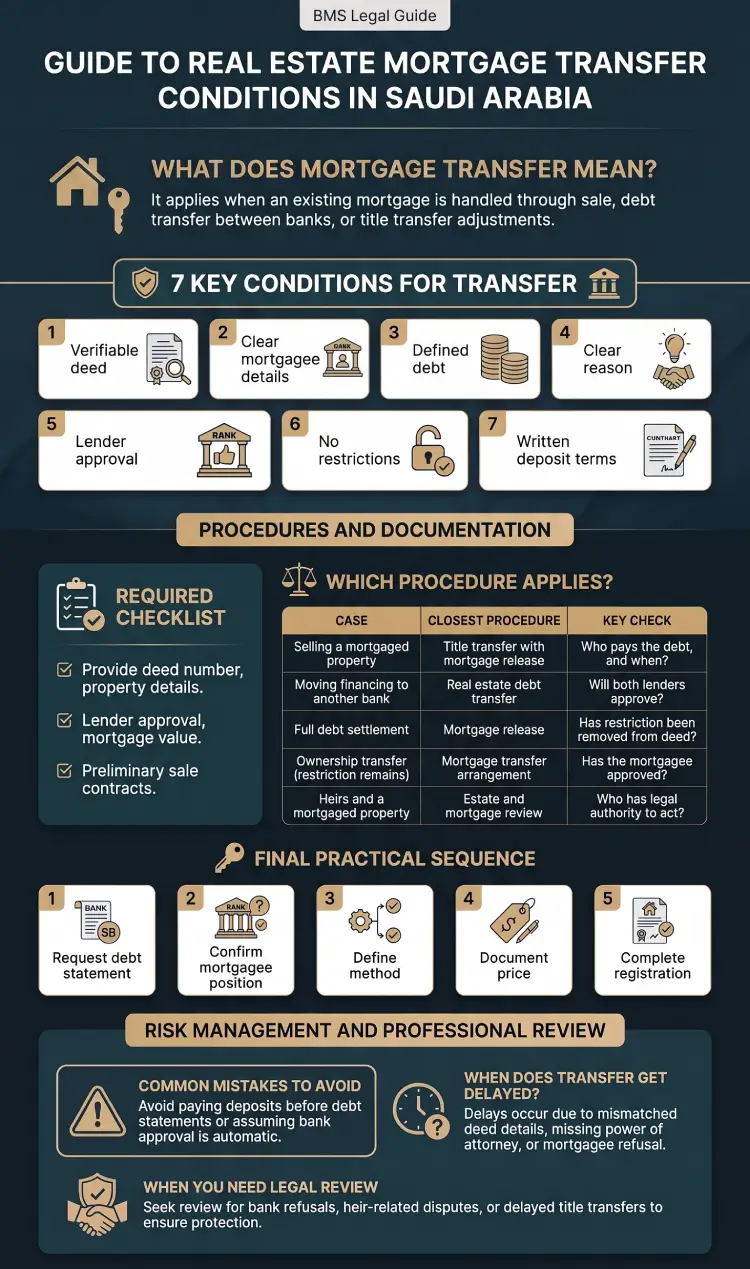
Review these points before transferring a property mortgage:
- A verifiable deed or ownership document.
- A visible existing mortgage and clear mortgagee details.
- A clear debt amount or maximum secured amount.
- A defined reason for transfer: sale, debt transfer, or financing arrangement.
- Mortgagee or financing provider approval where required.
- No restriction preventing title transfer or mortgage amendment.
- Clear documentation of the deposit and price if the transfer fails.
Before submitting a property mortgage transfer request, start by verifying the property deed and matching its details with the property, owner, and visible restrictions. If the transaction involves selling a mortgaged property, do not let the deposit come before the debt statement. Do not sign before knowing whether the mortgage will be released, transferred, or linked to debt transfer to another lender.
When Is the Correct Procedure Mortgage Transfer?
Mortgage transfer applies when the restriction remains relevant to the property and needs to be rearranged. Mortgage release usually follows full settlement or the end of the secured obligation, while sale concerns transferring ownership after dealing with existing restrictions.
Before submitting the request, determine how the mortgage affects the deed and financing. The case may require mortgage release after settlement, debt transfer, or conditional title transfer, not mortgage transfer alone.
| Case | Closest Procedure | What Must Be Settled Before Signing |
|---|---|---|
| Selling a property with an existing mortgage | Title transfer with mortgage release or transfer | Who pays the debt, and when? |
| Moving financing to another bank | Real estate debt transfer | Will both lenders accept the arrangement? |
| Full debt settlement | Mortgage release | Has the restriction been removed from the deed? |
| Ownership transfer with the restriction remaining | Mortgage transfer or mortgage arrangement | Has the mortgagee approved? |
| Heirs and a mortgaged property | Estate and mortgage review | Who has legal authority to act? |
If the required action is creating a new mortgage rather than dealing with an existing one, review real estate mortgage requirements before signing the financing contract or registering the restriction. The more accurate question is not only how to transfer a mortgage, but which procedure removes risk from the deed, price, and debt at the same time.
Procedures for Transferring a Property Mortgage in Saudi Arabia
Real estate mortgage transfer procedures begin with documents, then move to the appropriate electronic or financing route. Some users search for mortgage transfer through Najiz or the Real Estate Exchange, but the route depends on the applicant’s capacity and the nature of the mortgage.
Before creating a property mortgage transfer request, prepare:
- Deed number or ownership document.
- Property details matching the deed.
- Mortgagee or financing provider details.
- Mortgage value or debt amount.
- Maturity date or settlement statement.
- Mortgagee approval when the procedure affects its right.
- Any sale agreement, preliminary sale contract, or deposit arrangement.
Review the document number, debt value, and property description before submitting the request, as differences may stop the transaction. Where real estate financing exists, the transfer request should be linked to an updated debt statement. This statement confirms the required balance and avoids relying on verbal estimates that may change at title transfer or settlement.
Selling a Mortgaged Property Before Mortgage Transfer
Selling a mortgaged property may be possible in many cases, but risk begins when both parties treat the mortgage as a later detail. The mortgage affects the price, title transfer date, deposit outcome, and responsibility for settlement.
Before buying a property mortgaged to a bank or entering into a sale linked to an existing mortgage, request documents that show the mortgagee’s position and the debt amount.
Avoid these mistakes:
- Paying a deposit before receiving a debt statement.
- Signing a sale agreement without defining the mortgage outcome.
- Delivering the price to the seller before arranging settlement.
- Assuming the bank will automatically approve the transfer.
- Ignoring heirs or co-owners of the property.
- Failing to state what happens to the deposit if title transfer is delayed.
The agreement should state how the debt will be handled: Will it be paid from the price? Will the buyer assume it? Will both parties wait for the new lender’s approval? Each route has a different effect on ownership and liability.
Real Estate Debt Transfer and Its Link to Mortgage Transfer
Real estate debt transfer from one bank to another is not always the same as mortgage transfer. Debt transfer relates to the financing obligation and contract, while mortgage transfer relates to the registered restriction or security over the property.
Debt transfer may lead to more than one result:
- The new lender pays the existing debt.
- The old lender’s mortgage is released.
- A new mortgage is registered for the new lender.
- Security details are amended under the financing arrangement.
- Title transfer is delayed until financing approvals are completed.
Before transferring a real estate loan to another bank, understand the difference between a real estate loan and real estate financing, and verify the effect of the transfer on the deed, old mortgage, and mortgagee approval.
If your goal is buying a mortgaged property through a new lender, put the steps in writing: debt statement, new lender approval, settlement method, release of the old mortgage, then title transfer or registration of the new security.
When Does Mortgage Transfer Get Delayed?
Mortgage transfer is often delayed because of an issue that existed before the request, not because of the platform alone. The problem may be in the deed, mortgagee approval, debt details, or the legal capacity of the person requesting the transaction.
Common causes of delay include:
- Differences between property details in the deed and financing file.
- No updated debt statement.
- Mortgagee refusal to transfer or release the mortgage.
- Signing a sale before approvals are complete.
- An enforcement claim or attachment over the property.
- Heirs or co-owners without a clear arrangement.
- Missing power of attorney or insufficient authority.
- A settlement amount different from what the parties expected.
If the request is delayed, do not repeat it before identifying the reason. Collect the deed, financing contract, debt statement, sale agreement, and financing provider notices. Then determine whether the issue is documentary, financing-related, or a dispute requiring legal handling.
If the financing provider refuses to release the mortgage or delays the procedure without a clear reason, you may need a complaint against the real estate bank after collecting the documents and correspondence.
When Do You Need a Mortgage Transfer Lawyer?
You may need a specialist lawyer when the mortgage affects the safety of the transaction. This usually happens in sales, debt transfers, delayed title transfer, or disagreement over settlement.
Request legal review before acting if you face any of these cases:
- A buyer wants to pay a deposit on a mortgaged property.
- A seller wants title transfer before full debt settlement.
- Debt transfer from one bank to another.
- Heirs want to sell a mortgaged property.
- The bank refuses or delays mortgage release.
- A difference between the debt amount and paid instalments.
- An attachment or dispute over the property.
- Buying a mortgaged property in cash or through new financing.
If the matter involves selling a mortgaged property or transferring debt before title transfer, a review by a Jeddah law firm can help assess the real estate mortgage transfer conditions before signing or paying the deposit.
At BMS Legal for Law Practice and Legal Consultations, we review the deed, debt statement, financing contract, and the mortgagee’s position. We then identify whether the suitable route is mortgage transfer, mortgage release, conditional title transfer, or debt transfer.
FAQ About Real Estate Mortgage Transfer Conditions
What are the real estate mortgage transfer conditions in Saudi Arabia?
They include a valid deed, an existing mortgage, a clear debt amount, mortgagee approval where required, and no restriction preventing title transfer or mortgage amendment.
What is the difference between mortgage transfer and mortgage release?
Mortgage transfer keeps the restriction in place with a revised effect or arrangement. Mortgage release removes the restriction after settlement or the end of its cause.
Can a mortgaged property be sold before mortgage release?
Yes, if the settlement or transfer method is clear, the mortgagee approves where required, and the price and deposit are properly documented.
Is debt transfer the same as mortgage transfer?
No. Debt transfer concerns the financing obligation and lender. Mortgage transfer concerns the registered restriction or security over the property.
What is the most important document before buying a mortgaged property?
The debt statement from the financing provider, because it confirms the amount required and shows the mortgage effect on sale and title transfer.
Can a mortgage be transferred from one bank to another?
In many cases, the correct route is real estate debt transfer, which may require releasing the old mortgage and registering new security.
When does a mortgage transfer request get delayed?
It may be delayed due to mismatched deed details, missing documents, mortgagee refusal, an attachment, or unclear debt information.
Should the buyer pay a deposit before mortgage transfer?
It is not advisable before reviewing the deed, debt statement, and mortgagee position, while documenting what happens if title transfer is delayed.
What happens if the owner of a mortgaged property dies?
The mortgage does not automatically disappear. The debt and restriction are handled within the estate, heirs’ position, and mortgagee requirements.
Before dealing with a property under an existing mortgage, review how the restriction affects the price, ownership, and mortgagee approval. A safe transaction depends not only on the buyer and seller’s agreement, but also on clear debt details and a practical route for handling the mortgage before title transfer.
The phrase Real Estate Mortgage Transfer Conditions: 7 Checks Before Selling a Mortgaged Property summarizes what should be reviewed before the deposit, sale agreement, debt transfer, and title transfer. Start with the debt statement, then the mortgagee’s position, then the settlement or transfer method, then the title transfer date.
This sequence reduces the risk of delayed sale and protects both buyer and seller from later disputes over the restriction, price, or settlement liability.
Before signing a sale agreement for a mortgaged property, a real estate litigation lawyer in Jeddah can review the deed, debt statement, and mortgage release or transfer mechanism so title transfer does not get delayed later.
Official Sources